
Welcome! Get Connected with Milton, Alpharetta, & Roswell's Ultimate Resource.
Get to know the top businesses serving Milton, Alpharetta, & Roswell.
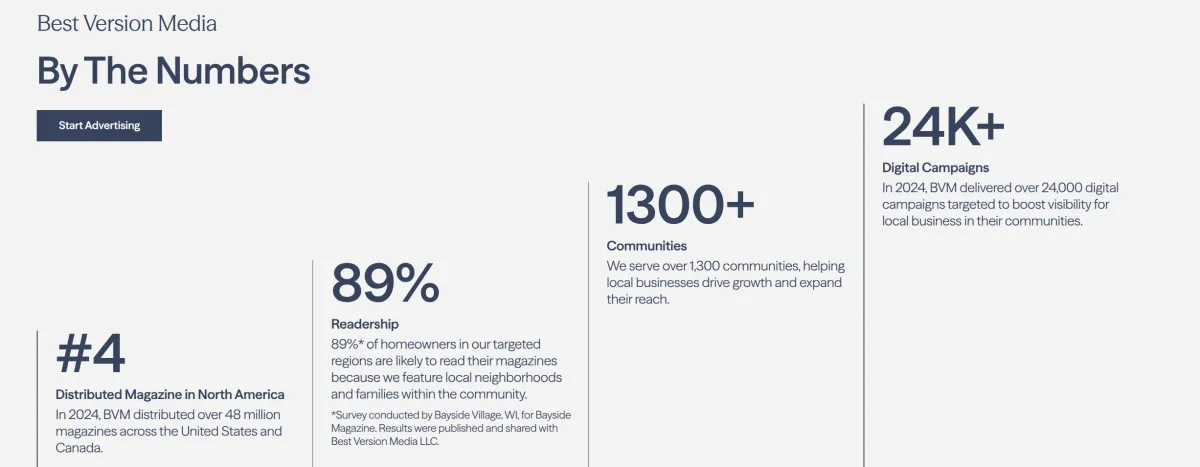
Our trusted Multi-Media Neighborhood Network and Monthly Publications have been bringing Neighbors & Local Businesses together since 2015.
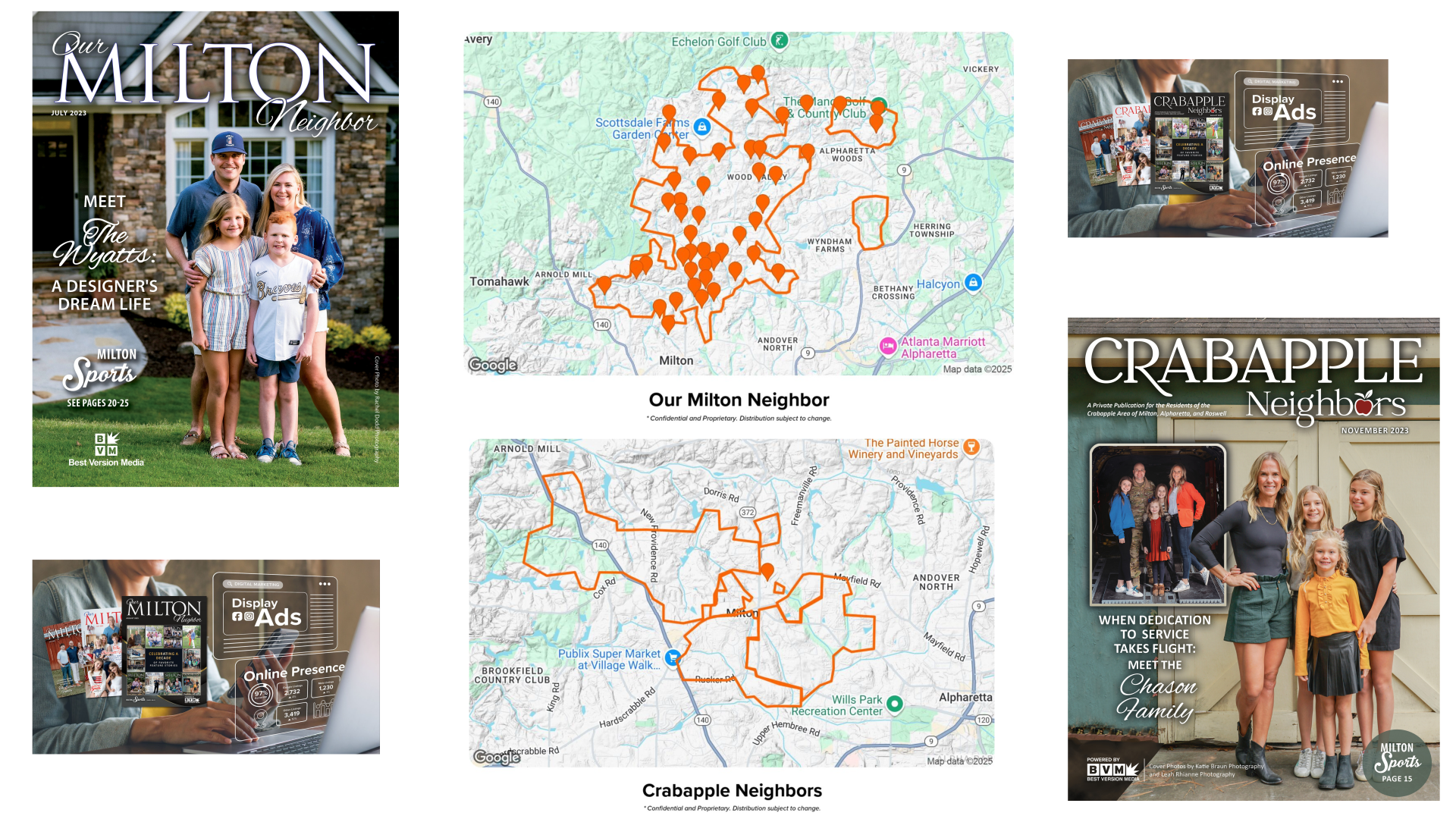
Powered by Best Version Media, our publications help local businesses increase visibility through a fully integrated approach by combining high-impact print, geo-targeted digital ads, and online presence management.
These tools work together to consistently position your brand across print, social, and search.
Our magazines are mailed directly to targeted neighborhoods, digital campaigns reach local audiences online, and our dashboard manages listings and reviews. This marketing mix is designed to maximize your impact in the community.
Click the image below to download a PDF detailing the 116+ neighborhoods we mail to on a monthly basis, including The Manor, White Columns, Crooked Creek, Atlanta National, Triple Crown, and many more!!
Celebrating The Best Of Milton, Alpharetta, & Roswell
In addition to our engaging community content, every month, we share stories about amazing businesses in the Milton, Alpharetta, & Roswell area.
See below for a few of our recent favorites.
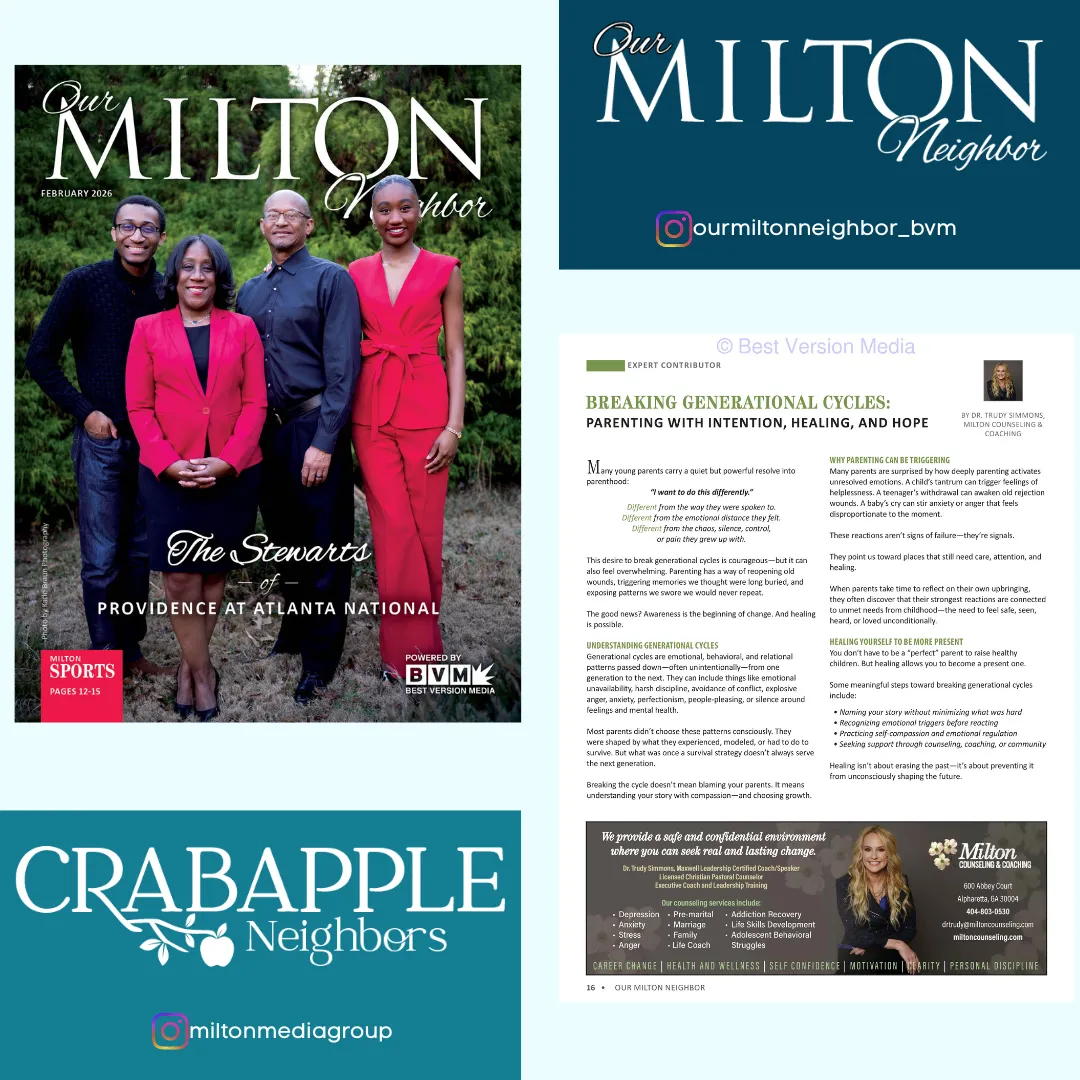
Breaking Generational Cycles: Parenting with Intention, Healing, and Hope by Dr. Trudy Simmons, Milton Counseling & Coaching
Many young parents carry a quiet but powerful resolve into parenthood:
“I want to do this differently.”
Different from the way they were spoken to.
Different from the emotional distance they felt.
Different from the chaos, silence, control, or pain they grew up with.
This desire to break generational cycles is courageous—but it can also feel overwhelming. Parenting has a way of reopening old wounds, triggering memories we thought were long buried, and exposing patterns we swore we would never repeat.
The good news? Awareness is the beginning of change. And healing is possible.
Understanding Generational Cycles
Generational cycles are emotional, behavioral, and relational patterns passed down—often unintentionally—from one generation to the next. They can include things like emotional unavailability, harsh discipline, avoidance of conflict, explosive anger, anxiety, perfectionism, people-pleasing, or silence around feelings and mental health.
Most parents didn’t choose these patterns consciously. They were shaped by what they experienced, modeled, or had to do to survive. But what was once a survival strategy doesn’t always serve the next generation.
Breaking the cycle doesn’t mean blaming your parents. It means understanding your story with compassion—and choosing growth.
Why Parenting Can Be Triggering
Many parents are surprised by how deeply parenting activates unresolved emotions. A child’s tantrum can trigger feelings of helplessness. A teenager’s withdrawal can awaken old rejection wounds. A baby’s cry can stir anxiety or anger that feels disproportionate to the moment.
These reactions aren’t signs of failure—they’re signals.
They point us toward places that still need care, attention, and healing.
When parents take time to reflect on their own upbringing, they often discover that their strongest reactions are connected to unmet needs from childhood—the need to feel safe, seen, heard, or loved unconditionally.
Healing Yourself to Be More Present
You don’t have to be a “perfect” parent to raise healthy children. But healing allows you to become a present one.
Some meaningful steps toward breaking generational cycles include:
Naming your story without minimizing what was hard
Recognizing emotional triggers before reacting
Practicing self-compassion and emotional regulation
Seeking support through counseling, coaching, or community
Healing isn’t about erasing the past—it’s about preventing it from unconsciously shaping the future.
Parenting from Intention, Not Reaction
As parents heal, they gain the ability to pause instead of react. They can choose connection over control, curiosity over criticism, and boundaries over fear.
This doesn’t mean parenting without limits. It means setting limits without shame, discipline without harm, and guidance without emotional withdrawal.
Children don’t need perfect parents. They need regulated, reflective ones—parents who are willing to repair when mistakes are made and model what growth looks like in real life.
The Ripple Effect of Healing
When one generation chooses healing, the impact reaches far beyond their own household.
Children raised by emotionally aware parents are more likely to develop resilience, express emotions safely, form healthy relationships, and continue the work of breaking cycles in their own future families.
Breaking generational cycles isn’t a single moment—it’s a daily decision. A choice to pause, reflect, and respond differently than before.
Every time a parent chooses healing, they give their children something priceless: a new legacy.
“The good person leaves an inheritance for their children’s children.” — Proverbs 13:22
About the Author
Dr. Trudy Simmons is a counselor, coach, speaker, Ironman, and author who is passionate about helping individuals and families heal, grow, and live with purpose. She is the founder of Milton Counseling & Coaching and the host and producer of The Christian View, an award-winning talk show focused on faith, mental health, and whole-person well-being.
Dr. Trudy works with parents, couples, and leaders to address trauma, emotional health, and generational patterns that impact relationships and family life. She speaks to churches, schools, community organizations, and professional groups on topics including breaking generational cycles, trauma-informed parenting, emotional resilience, mental wellness, and living fit in body, mind, and spirit.
For counseling, coaching, speaking engagements, or workshops, Dr. Trudy can be reached through Milton Counseling & Coaching or The Christian View media platforms.
Learn more: https://miltoncounseling.com/
Follow them: https://www.instagram.com/drtrudysimmons/


Good Neighbor Podcast Milton & More
Positive influencers with an emphasis on education and community engagement.
As producers of Good Neighbor Podcast, we seek out businesses that appeal to our audience of good people in good neighborhoods with good money to spend on quality services and products. If you’re a business owner in or around Crabapple or Milton chances are good you have a compelling story to share. If we haven’t reached you yet, please give us a call. We’d love to broadcast you and your services.
Breaking Generational Cycles: Parenting with Intention, Healing, and Hope by Dr. Trudy Simmons, Milton Counseling & Coaching
Many young parents carry a quiet but powerful resolve into parenthood:
“I want to do this differently.”
Different from the way they were spoken to.
Different from the emotional distance they felt.
Different from the chaos, silence, control, or pain they grew up with.
This desire to break generational cycles is courageous—but it can also feel overwhelming. Parenting has a way of reopening old wounds, triggering memories we thought were long buried, and exposing patterns we swore we would never repeat.
The good news? Awareness is the beginning of change. And healing is possible.
Understanding Generational Cycles
Generational cycles are emotional, behavioral, and relational patterns passed down—often unintentionally—from one generation to the next. They can include things like emotional unavailability, harsh discipline, avoidance of conflict, explosive anger, anxiety, perfectionism, people-pleasing, or silence around feelings and mental health.
Most parents didn’t choose these patterns consciously. They were shaped by what they experienced, modeled, or had to do to survive. But what was once a survival strategy doesn’t always serve the next generation.
Breaking the cycle doesn’t mean blaming your parents. It means understanding your story with compassion—and choosing growth.
Why Parenting Can Be Triggering
Many parents are surprised by how deeply parenting activates unresolved emotions. A child’s tantrum can trigger feelings of helplessness. A teenager’s withdrawal can awaken old rejection wounds. A baby’s cry can stir anxiety or anger that feels disproportionate to the moment.
These reactions aren’t signs of failure—they’re signals.
They point us toward places that still need care, attention, and healing.
When parents take time to reflect on their own upbringing, they often discover that their strongest reactions are connected to unmet needs from childhood—the need to feel safe, seen, heard, or loved unconditionally.
Healing Yourself to Be More Present
You don’t have to be a “perfect” parent to raise healthy children. But healing allows you to become a present one.
Some meaningful steps toward breaking generational cycles include:
Naming your story without minimizing what was hard
Recognizing emotional triggers before reacting
Practicing self-compassion and emotional regulation
Seeking support through counseling, coaching, or community
Healing isn’t about erasing the past—it’s about preventing it from unconsciously shaping the future.
Parenting from Intention, Not Reaction
As parents heal, they gain the ability to pause instead of react. They can choose connection over control, curiosity over criticism, and boundaries over fear.
This doesn’t mean parenting without limits. It means setting limits without shame, discipline without harm, and guidance without emotional withdrawal.
Children don’t need perfect parents. They need regulated, reflective ones—parents who are willing to repair when mistakes are made and model what growth looks like in real life.
The Ripple Effect of Healing
When one generation chooses healing, the impact reaches far beyond their own household.
Children raised by emotionally aware parents are more likely to develop resilience, express emotions safely, form healthy relationships, and continue the work of breaking cycles in their own future families.
Breaking generational cycles isn’t a single moment—it’s a daily decision. A choice to pause, reflect, and respond differently than before.
Every time a parent chooses healing, they give their children something priceless: a new legacy.
“The good person leaves an inheritance for their children’s children.” — Proverbs 13:22
About the Author
Dr. Trudy Simmons is a counselor, coach, speaker, Ironman, and author who is passionate about helping individuals and families heal, grow, and live with purpose. She is the founder of Milton Counseling & Coaching and the host and producer of The Christian View, an award-winning talk show focused on faith, mental health, and whole-person well-being.
Dr. Trudy works with parents, couples, and leaders to address trauma, emotional health, and generational patterns that impact relationships and family life. She speaks to churches, schools, community organizations, and professional groups on topics including breaking generational cycles, trauma-informed parenting, emotional resilience, mental wellness, and living fit in body, mind, and spirit.
For counseling, coaching, speaking engagements, or workshops, Dr. Trudy can be reached through Milton Counseling & Coaching or The Christian View media platforms.
Learn more: https://miltoncounseling.com/
Follow them: https://www.instagram.com/drtrudysimmons/
Meet Your Publisher
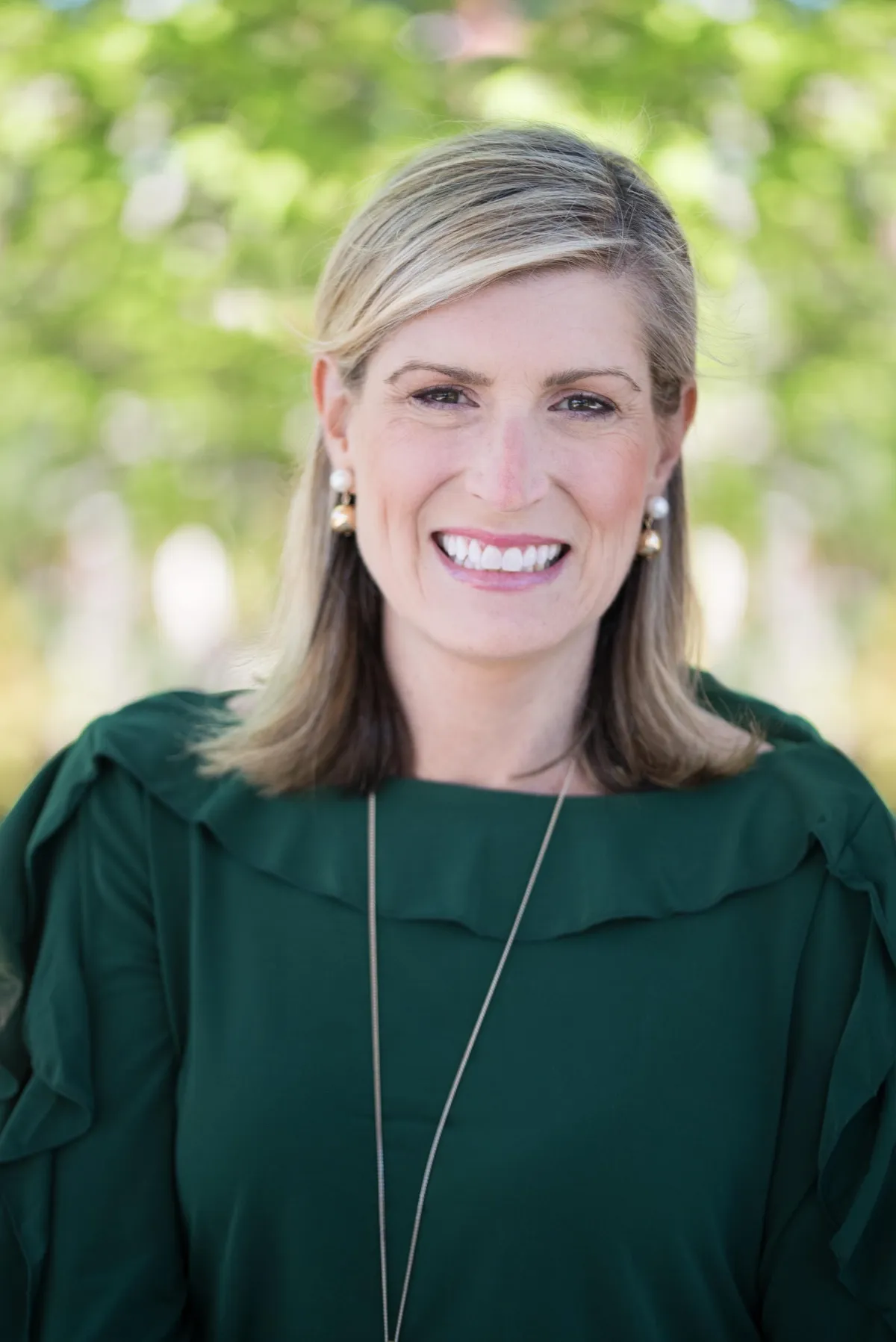
Stacey Poehler
Stacey’s passion has always been in creating connections. Whether it be connecting two like-minded individuals, connecting a person to a product or service, or connecting businesses to the local community, she has always put an emphasis on how her work can help others.
Working with local businesses to problem solve and grow their brands and customer base through custom solutions and content marketing, Stacey brings a wealth of experience from her previous work in higher education marketing and branding. Past Georgia clients include the Terry College of Business at UGA, Georgia State College, Spelman, and others.
Stacey resides in Milton, GA with her husband, three children, and three rescued pups. She is a past president of the Crabapple Crossing Elementary School PTO, a member of the Milton chapter of the National Charity League, an elected parent representative on the Milton High School School Governance Council, and an avid tennis player. She loves being part of the Milton and Crabapple communities and can't think of a job better suited for her talents and interests.


Facebook
Instagram
Facebook
Instagram