
Welcome! Get Connected with Milton, Alpharetta, & Roswell's Ultimate Resource.
Get to know the top businesses serving Milton, Alpharetta, & Roswell.
Our trusted Multi-Media Neighborhood Network and Monthly Publications have been bringing Neighbors & Local Businesses together since 2015.
Powered by Best Version Media, our publications help local businesses increase visibility through a fully integrated approach by combining high-impact print, geo-targeted digital ads, and online presence management.
These tools work together to consistently position your brand across print, social, and search.
Our magazines are mailed directly to targeted neighborhoods, digital campaigns reach local audiences online, and our dashboard manages listings and reviews. This marketing mix is designed to maximize your impact in the community.
Click the image below to download a PDF detailing the 116+ neighborhoods we mail to on a monthly basis, including The Manor, White Columns, Crooked Creek, Atlanta National, Triple Crown, and many more!!
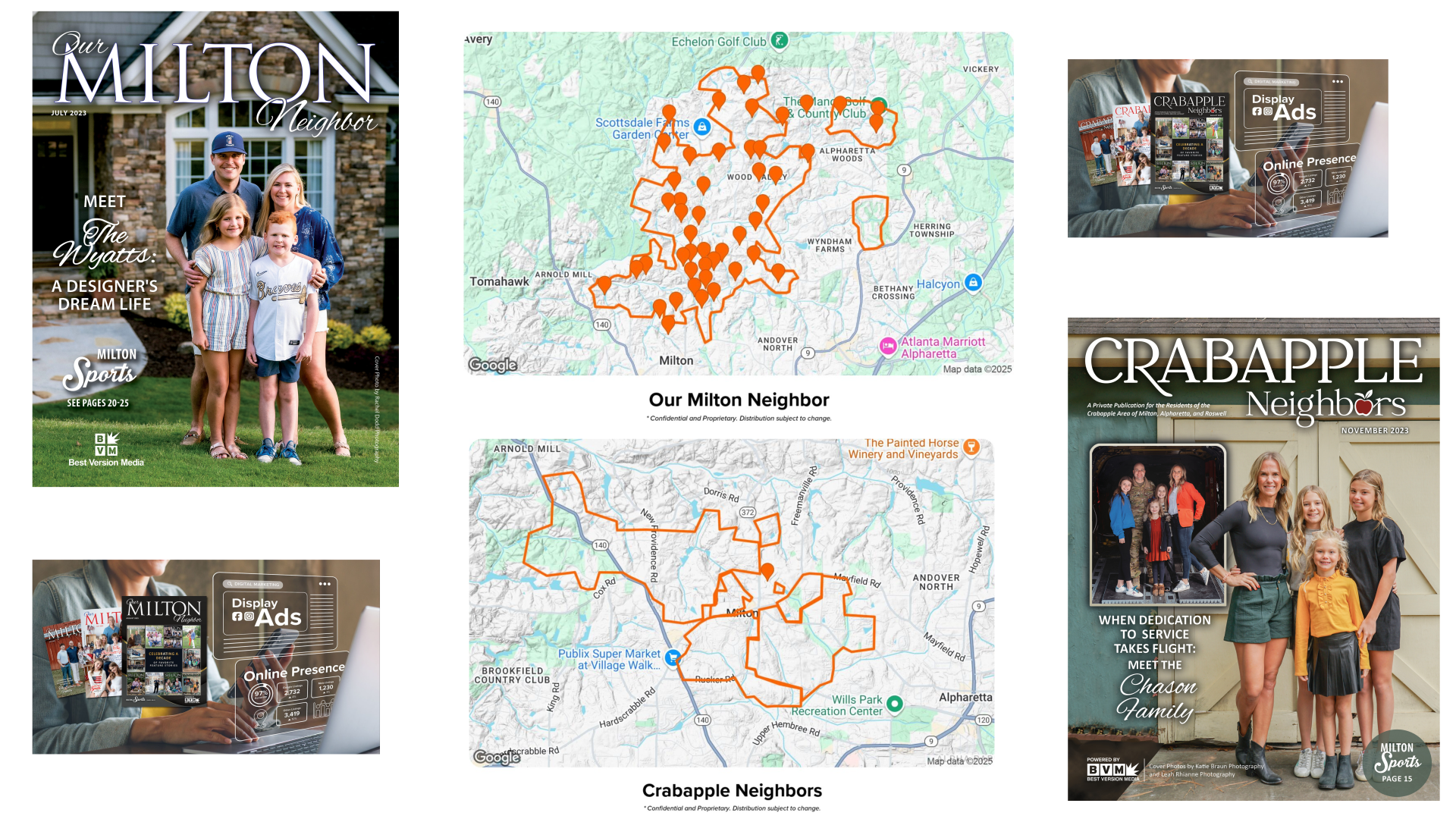

Celebrating The Best Of Milton, Alpharetta, & Roswell
In addition to our engaging community content, every month, we share stories about amazing businesses in the Milton, Alpharetta, & Roswell area.
See below for a few of our recent favorites.

The Power of Gratitude: How It Strengthens Us in Hard Times and Shapes Who We Are by Dr. Trudy Simmons, Milton Counseling & Coaching
Gratitude is more than a polite “thank you.” It is a posture of the heart—a spiritual discipline and a therapeutic practice that changes how we experience life. In my years as a counselor and coach, I’ve witnessed the profound ways gratitude transforms people from the inside out. It shifts our perspective, helps us heal, and strengthens us during life’s hardest seasons.
While gratitude may seem simple, its impact is profound. Scripture tells us, “Give thanks in all circumstances; for this is God’s will for you in Christ Jesus” (1 Thessalonians 5:18). Gratitude is not denial—it’s a declaration that God is still good even when life feels hard.
Gratitude Refocuses and Rewires the Mind
Modern neuroscience confirms what Scripture has long taught: gratitude renews the mind. When we express genuine thankfulness, our brains release dopamine and serotonin—two of the “feel-good” neurotransmitters responsible for improving mood, motivation, and resilience. Over time, practicing gratitude literally rewires the brain to focus more on what is good and possible rather than what is missing or broken.
In counseling and coaching, I often encourage clients to start a “gratitude practice”—writing down three things they’re thankful for each day. It may sound small, but it begins to retrain the mind to see blessings even amid pain. What we repeatedly focus on grows stronger, and gratitude helps us build new neural pathways that lead to peace, hope, and emotional stability.
Romans 12:2 reminds us to “be transformed by the renewing of your mind.” Gratitude is one of the most powerful ways to do just that—it helps us move from reaction to reflection, from fear to faith.
Gratitude Strengthens Us in Hard Times
When life unravels—when jobs are lost, relationships strain, or dreams feel delayed—gratitude becomes an anchor for the soul. It doesn’t erase pain, but it offers perspective. It reminds us that even in uncertainty, God’s faithfulness remains constant.
From a therapeutic standpoint, gratitude helps calm the body’s stress response. It lowers cortisol levels and activates the parasympathetic nervous system, allowing the body to rest and heal. Spiritually, gratitude draws us closer to the heart of God. It says, “Lord, even when I don’t understand, I trust that You are with me.”
As both a counselor and a coach, I’ve seen gratitude turn despair into direction. When clients begin to name what they’re thankful for—even small things—it shifts their energy from helplessness to empowerment. Gratitude doesn’t just help us survive the storm; it teaches us how to grow through it.
Gratitude Shapes Our Character and Identity
Gratitude is not only something we do; it becomes part of who we are. It softens the heart, builds empathy, and fosters deeper connection with others. People who live with gratitude tend to exhibit higher emotional intelligence, better relationships, and stronger resilience in the face of adversity.
Spiritually, a grateful heart aligns us with God’s character. It humbles us, reminding us that every breath, every opportunity, every moment of grace is a gift. Gratitude is what allows us to walk through difficult seasons with peace, knowing that even the trials are forming something beautiful within us.
Practical Ways to Cultivate a Grateful Heart
Start a Gratitude Journal: Each morning or evening, write down three things you’re thankful for. Be specific—it trains the brain to look for God’s hand in everyday life.
Shift Your Language: Replace “I have to” with “I get to.” It reframes tasks as opportunities rather than obligations.
Pray with Thanksgiving: Philippians 4:6 reminds us to bring our requests with thanksgiving. Gratitude activates peace before the answer arrives.
Use Gratitude in Coaching or Counseling Conversations: Ask reflective questions such as, “What is one thing that’s still good, even in this?” or “Where can you see God’s grace at work right now?”
Express It to Others: Gratitude spoken heals hearts—yours and theirs.
Closing Reflection
Gratitude is one of God’s greatest gifts to the human spirit. It rewires our brains, renews our minds, and restores our hope. It’s not a quick fix but a powerful practice that transforms how we live and love. When we give thanks, even in pain, we invite God into the very places that hurt—and that’s where healing begins.
“I will give thanks to You, Lord, with all my heart; I will tell of all Your wonderful deeds.” —Psalm 9:1
So today, pause and breathe. Look around you. Whisper a quiet thank you—for the lessons, the love, and even the losses that shaped you. Gratitude won’t always change your circumstances, but it will always change you.
For more information about counseling/coaching, speaking, or workshops, please reach out to Dr. Trudy.
With gratitude,
Dr. Trudy Simmons, PhD
Counselor, Coach, and Host of The Christian View
Founder of Milton Counseling & Coaching
Learn more: https://miltoncounseling.com/
Follow them: https://www.instagram.com/drtrudysimmons/


Good Neighbor Podcast Milton & More
Positive influencers with an emphasis on education and community engagement.
As producers of Good Neighbor Podcast, we seek out businesses that appeal to our audience of good people in good neighborhoods with good money to spend on quality services and products. If you’re a business owner in or around Crabapple or Milton chances are good you have a compelling story to share. If we haven’t reached you yet, please give us a call. We’d love to broadcast you and your services.
The Power of Gratitude: How It Strengthens Us in Hard Times and Shapes Who We Are by Dr. Trudy Simmons, Milton Counseling & Coaching
Gratitude is more than a polite “thank you.” It is a posture of the heart—a spiritual discipline and a therapeutic practice that changes how we experience life. In my years as a counselor and coach, I’ve witnessed the profound ways gratitude transforms people from the inside out. It shifts our perspective, helps us heal, and strengthens us during life’s hardest seasons.
While gratitude may seem simple, its impact is profound. Scripture tells us, “Give thanks in all circumstances; for this is God’s will for you in Christ Jesus” (1 Thessalonians 5:18). Gratitude is not denial—it’s a declaration that God is still good even when life feels hard.
Gratitude Refocuses and Rewires the Mind
Modern neuroscience confirms what Scripture has long taught: gratitude renews the mind. When we express genuine thankfulness, our brains release dopamine and serotonin—two of the “feel-good” neurotransmitters responsible for improving mood, motivation, and resilience. Over time, practicing gratitude literally rewires the brain to focus more on what is good and possible rather than what is missing or broken.
In counseling and coaching, I often encourage clients to start a “gratitude practice”—writing down three things they’re thankful for each day. It may sound small, but it begins to retrain the mind to see blessings even amid pain. What we repeatedly focus on grows stronger, and gratitude helps us build new neural pathways that lead to peace, hope, and emotional stability.
Romans 12:2 reminds us to “be transformed by the renewing of your mind.” Gratitude is one of the most powerful ways to do just that—it helps us move from reaction to reflection, from fear to faith.
Gratitude Strengthens Us in Hard Times
When life unravels—when jobs are lost, relationships strain, or dreams feel delayed—gratitude becomes an anchor for the soul. It doesn’t erase pain, but it offers perspective. It reminds us that even in uncertainty, God’s faithfulness remains constant.
From a therapeutic standpoint, gratitude helps calm the body’s stress response. It lowers cortisol levels and activates the parasympathetic nervous system, allowing the body to rest and heal. Spiritually, gratitude draws us closer to the heart of God. It says, “Lord, even when I don’t understand, I trust that You are with me.”
As both a counselor and a coach, I’ve seen gratitude turn despair into direction. When clients begin to name what they’re thankful for—even small things—it shifts their energy from helplessness to empowerment. Gratitude doesn’t just help us survive the storm; it teaches us how to grow through it.
Gratitude Shapes Our Character and Identity
Gratitude is not only something we do; it becomes part of who we are. It softens the heart, builds empathy, and fosters deeper connection with others. People who live with gratitude tend to exhibit higher emotional intelligence, better relationships, and stronger resilience in the face of adversity.
Spiritually, a grateful heart aligns us with God’s character. It humbles us, reminding us that every breath, every opportunity, every moment of grace is a gift. Gratitude is what allows us to walk through difficult seasons with peace, knowing that even the trials are forming something beautiful within us.
Practical Ways to Cultivate a Grateful Heart
Start a Gratitude Journal: Each morning or evening, write down three things you’re thankful for. Be specific—it trains the brain to look for God’s hand in everyday life.
Shift Your Language: Replace “I have to” with “I get to.” It reframes tasks as opportunities rather than obligations.
Pray with Thanksgiving: Philippians 4:6 reminds us to bring our requests with thanksgiving. Gratitude activates peace before the answer arrives.
Use Gratitude in Coaching or Counseling Conversations: Ask reflective questions such as, “What is one thing that’s still good, even in this?” or “Where can you see God’s grace at work right now?”
Express It to Others: Gratitude spoken heals hearts—yours and theirs.
Closing Reflection
Gratitude is one of God’s greatest gifts to the human spirit. It rewires our brains, renews our minds, and restores our hope. It’s not a quick fix but a powerful practice that transforms how we live and love. When we give thanks, even in pain, we invite God into the very places that hurt—and that’s where healing begins.
“I will give thanks to You, Lord, with all my heart; I will tell of all Your wonderful deeds.” —Psalm 9:1
So today, pause and breathe. Look around you. Whisper a quiet thank you—for the lessons, the love, and even the losses that shaped you. Gratitude won’t always change your circumstances, but it will always change you.
For more information about counseling/coaching, speaking, or workshops, please reach out to Dr. Trudy.
With gratitude,
Dr. Trudy Simmons, PhD
Counselor, Coach, and Host of The Christian View
Founder of Milton Counseling & Coaching
Learn more: https://miltoncounseling.com/
Follow them: https://www.instagram.com/drtrudysimmons/
Meet Your Publisher

Stacey Poehler
Stacey’s passion has always been in creating connections. Whether it be connecting two like-minded individuals, connecting a person to a product or service, or connecting businesses to the local community, she has always put an emphasis on how her work can help others.
Working with local businesses to problem solve and grow their brands and customer base through custom solutions and content marketing, Stacey brings a wealth of experience from her previous work in higher education marketing and branding. Past Georgia clients include the Terry College of Business at UGA, Georgia State College, Spelman, and others.
Stacey resides in Milton, GA with her husband, three children, and three rescued pups. She is a past president of the Crabapple Crossing Elementary School PTO, a member of the Milton chapter of the National Charity League, an elected parent representative on the Milton High School School Governance Council, and an avid tennis player. She loves being part of the Milton and Crabapple communities and can't think of a job better suited for her talents and interests.


Facebook
Instagram
Facebook
Instagram